Hearing aids alone may not be enough at the television, on the phone or in a hall. The right assistive listening devices for hearing loss depend on the situation: loops for venues, streaming for TV and calls, microphones for noise.
This guide sorts add-on options by where listening gets difficult, then explains how each one connects. It sits within the wider range of assistive technology devices, and the table and checklist further down turn the options into a short decision.
Hearing loops in public venues
A hearing loop delivers sound straight to a hearing aid instead of leaving it to travel across a room. Discover Hearing Centre explains that loop systems use electromagnetic fields to transmit sound directly to a hearing aid with a telecoil. Atlantic Hearing Care describes the same arrangement as a magnetic wireless signal picked up by a hearing aid that is set to its telecoil.
Where loops are found
Discover Hearing Centre lists churches, airports, theatres and conference halls as places where hearing loops are installed. The equipment belongs to the venue, so the listener’s main task is making sure the hearing aid can receive it. Loops suit anyone who attends services, performances, travel hubs or meetings and wants the sound without carrying extra gear.
Do hearing aids need a telecoil?
For loop reception, yes. Discover Hearing Centre says a loop works if the hearing aid has a telecoil (T-coil) setting. A hearing aid without that setting cannot use a loop, and the other devices in this guide then fill the gap. Check for a telecoil before buying, and again when comparing over the counter hearing aids vs prescription models, because the feature decides whether venue loops are usable at all.
TV listening systems
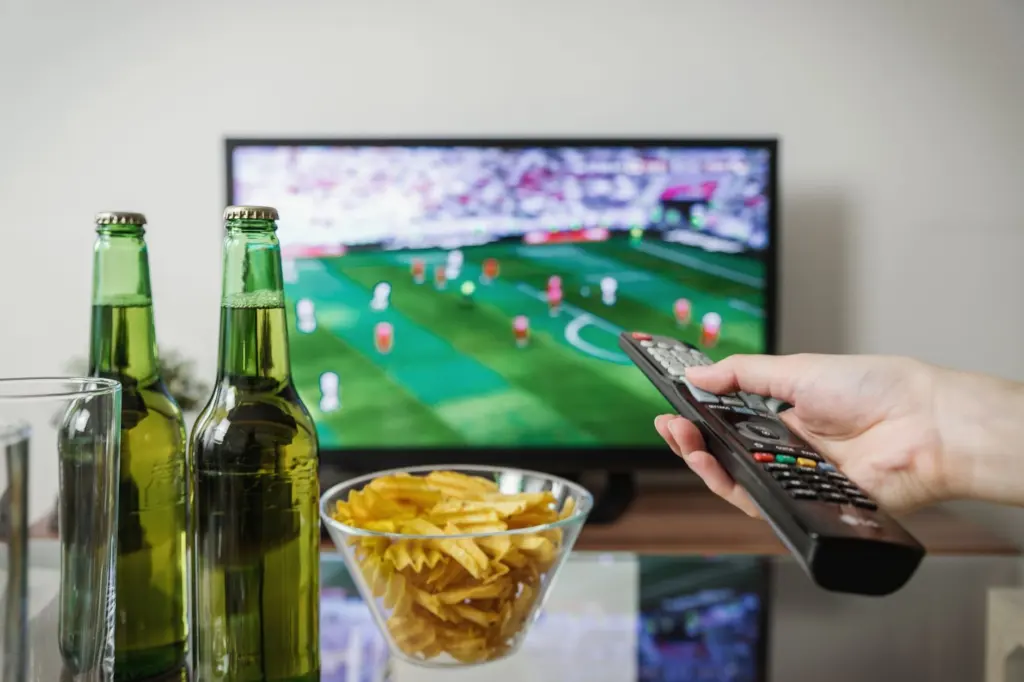
TV listening systems send programme sound to the listener rather than relying on a louder room. Ear Science Institute Australia notes that sound can be streamed directly to headphones or hearing aids using Bluetooth. Atlantic Hearing Care counts TV streamers among the common categories of assistive listening device, which makes this the most familiar add-on for home use.
Bluetooth or infrared
Bluetooth is the simpler story to explain: the television sends sound to headphones or compatible hearing aids. Infrared systems come with a physical condition. Discover Hearing Centre says they rely on a clear line of sight between the transmitter and the listener. That makes infrared a better fit for a fixed viewing seat facing the screen than for someone who moves around the room while the programme plays.
Phone calls and Bluetooth streamers
Phone calls need a different fix because the problem is the voice in the handset, not the room. Discover Hearing Centre describes amplified phones as designed to make conversations clearer and louder, with volume control. An amplified phone suits someone who wants a dedicated handset that helps without extra pairing or accessories.
Do you need a Bluetooth streamer?
It depends on where you want the sound to land. Ear Science Institute Australia describes Bluetooth as a way to stream sound directly to headphones or hearing aids. If headphones are acceptable for TV and calls, a streamer may add little. If the sound should reach the hearing aids themselves, the streamer is the link between the sound source and the aids. Whether a given pair of hearing aids receives Bluetooth directly or needs a streamer in between varies by model, so confirm this with the supplier before buying either.
Noisy places and group settings
Noise and distance are where hearing aids alone may fall short, and where radio-based and microphone-based devices earn their place. Ear Science Institute Australia says remote microphones help improve speech clarity in noisy environments. Discover Hearing Centre adds that FM systems use radio signals to carry sound from a speaker directly to a listener. The key idea in both cases is that the talker’s voice is captured close to the source instead of competing with the room.
Atlantic Hearing Care says assistive listening devices work by minimizing background noise and overriding poor acoustics such as echo, and that hard-of-hearing listeners need a volume increase of about 15 to 25 dB. That second figure helps explain why simply turning the volume up rarely solves a noisy room: the listener needs a stronger speech signal relative to the surroundings, not just a louder environment.
- FM system: suits a talker addressing a listener or a small group, such as a lecture or meeting, because the speaker’s voice travels by radio to the listener.
- Remote microphone: suits conversations in noisy surroundings, where moving the microphone near the person speaking improves clarity.
- Loop: suits venues that already have one installed, as described above, with no extra transmitter for the listener to manage.
When speech is still hard to follow in a busy setting, written support can complement sound-based devices. The best speech to text app for deaf is covered in the guide to best speech to text app for deaf users and captioning tools.
Personal amplifiers for close conversation
A personal amplifier is the simplest and most portable option on this list. Ear Science Institute Australia describes personal amplifiers as simple, portable devices that help amplify speech in close conversations. They suit one-to-one chats at a table, in a car or at an appointment, and they are less suited to a far-away speaker or a large hall, where a loop or FM system is the better match.
Discover Hearing Centre notes that personal amplifiers are not classified as medical devices like hearing aids. That is a useful boundary: they are a practical add-on, not a treatment. Ear Science Institute Australia says assistive listening devices can be used on their own for mild hearing loss, or when hearing aids cannot be worn, so a personal amplifier can also stand alone in those cases.

Choosing by situation
The table compares the options on what each connects to and when it is the sensible pick.
| Situation | Device | How it connects | Planning use |
|---|---|---|---|
| Churches, theatres, airports, conference halls | Hearing loop | Electromagnetic signal picked up by a hearing aid with a telecoil (T-coil) setting | Worth using only if the hearing aid has the telecoil setting |
| Television at home | TV listening system | Bluetooth to headphones or hearing aids; infrared needs a clear line of sight | Match the connection to where you sit and what you wear |
| Phone calls | Amplified phone | Handset with louder, clearer sound and volume control | Simple choice when the handset itself is the problem |
| Noisy room or distant speaker | FM system or remote microphone | Radio signal from the speaker to the listener | Best when the talker can wear or hold the transmitter |
| Close conversation | Personal amplifier | Portable device that amplifies speech | Low-complexity add-on for one-to-one talk |
The comparison draws on guidance from Discover Hearing Centre and Ear Science Institute Australia.
Decision checklist
- Rank the situations by how often they cause trouble, such as TV evenings, phone calls or weekly services.
- Match each situation to its connection type: telecoil for loops, Bluetooth for streaming, radio for FM, line of sight for infrared.
- Choose the device type from the table, starting with the situation that matters most.
- Ask a hearing professional or supplier whether your hearing aids work directly with the device or need an accessory.
- Enquire whether insurance or a hearing health program covers any of the cost, since Discover Hearing Centre says some assistive listening devices may be covered.
Frequently asked questions
Can assistive listening devices be used without hearing aids?
Yes, in some cases. Ear Science Institute Australia says they can be used on their own for mild hearing loss or when hearing aids cannot be worn.
Is a personal amplifier the same as a hearing aid?
No. According to Discover Hearing Centre, personal amplifiers fall outside the medical-device category that covers hearing aids.
Can insurance pay for assistive listening devices?
Possibly. Discover Hearing Centre says some devices may be covered by insurance or hearing health programs, so it is worth asking before paying in full.
What are the main types of assistive listening device?
Atlantic Hearing Care groups common devices into four categories: personal amplifiers, amplified telephones, TV streamers and notification systems. Loops, FM systems and remote microphones add venue and noise solutions on top of those.