
A small campervan or shed panel feeding a battery can often run on PWM, while larger, higher-voltage arrays and lithium batteries favour MPPT. This mppt vs pwm charge controller comparison sets out the criteria and the sizing checks that decide it.
The controller sits between the panels and the battery, so it decides how much panel output reaches storage. Wider system planning, including home solar panels and battery storage, is covered separately. This guide stays with small off-grid systems.
Decision criteria before comparing models
Four checks settle most choices, and they work best in this order. Each one can rule a controller type out before price comes into it.
- Compare panel voltage with battery voltage. A PWM controller reduces solar panel voltage to battery voltage. An MPPT controller can accept an array at a higher voltage than the battery. If the panels are not matched to the battery, MPPT is the safer route.
- Judge the size of the array. PWM suits small arrays and low-power charging. Larger arrays are where an MPPT controller earns its extra cost.
- Identify the battery chemistry. Lead-acid, AGM and gel batteries are supported by both types. Lithium iron phosphate (LiFePO4) points towards MPPT.
- Set a budget against expected harvest. PWM is cheaper to buy. MPPT returns more energy from the same panels under the same conditions, but the gain varies with the system.
Sizing the controller comes after the type is chosen. The sizing section below covers that step.
MPPT and PWM compared side by side
PWM is the cheaper, simpler controller for small, low-voltage setups. MPPT costs more, accepts higher input voltage and recovers more energy from the same panels.
| Criterion | PWM charge controller | MPPT charge controller | Planning use |
|---|---|---|---|
| Typical efficiency | 75-85% (typical) | Can yield 25-30% more usable energy over time than PWM under the same conditions | Treat the MPPT gain as a typical range, not a guarantee for every site. |
| Typical price | $30-$100 | $120-$400+ | Weigh the price gap against how much extra energy the array can deliver. |
| Input voltage | Must match battery nominal voltage (12V/24V) | Up to 100V+ DC input; works with 24V, 36V and 48V arrays charging 12V batteries | Mismatched panel and battery voltages rule PWM out. |
| Battery chemistries | Lead-acid, AGM, gel | Lead-acid, AGM, gel, LiFePO4 | Choose MPPT if lithium is planned, now or later. |
Efficiency and price figures come from an RV solar controller comparison, and input-voltage and chemistry figures from a controller buying guide.
The efficiency gap is not a single number. Another guide from The Solar Lab puts MPPT at 10-30% higher efficiency than PWM. Plan on a gain somewhere inside that spread rather than at the top of it, and expect the benefit to grow with array size.
When a PWM controller is good enough
A PWM controller is good enough for small arrays and low-power systems. One buying guide limits PWM to small arrays (<200W), and a second guide lists RVs and cabins as typical small-system uses. In low-power charging that guide reports equal or better energy harvesting from PWM.
PWM also wins on simplicity. The Solar Lab notes that PWM units are cheaper than MPPT controllers and that a basic setup can use a PWM controller plugged directly into the batteries.
- Choose PWM when the panel is small, the battery is lead-acid, AGM or gel, and the panel voltage already matches the battery.
- Choose MPPT instead when panels run at a higher voltage than the battery, the array is growing, or lithium is on the way.
PWM forces panel voltage down to battery voltage, so the panels have to be chosen to suit it. If panel type is still undecided, monocrystalline vs polycrystalline solar panels explains how the two cell types differ.
Battery chemistry and controller choice
Battery chemistry does affect the choice. The xmnewlight guide lists lead-acid, AGM and gel as supported by both controller types, and LiFePO4 only on the MPPT side. The Solar Lab calls MPPT more suitable for protecting lithium batteries.
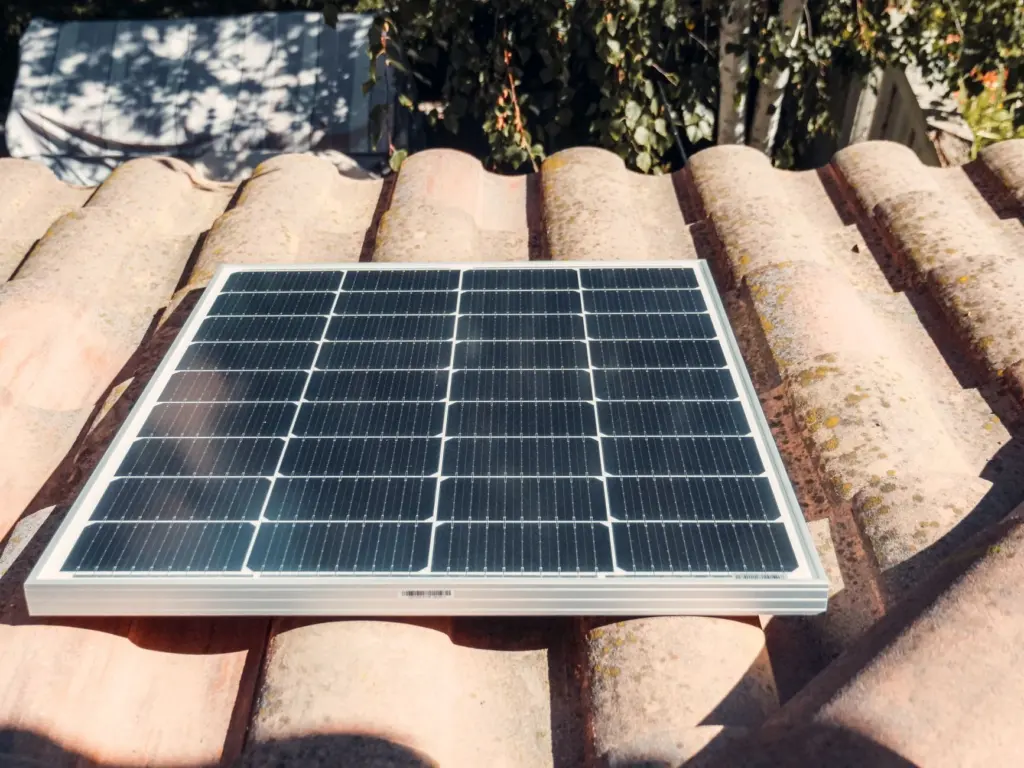
Charge voltage is part of the reason the settings matter. The same guide gives a typical lead-acid charge voltage of around 14.4V for a 12V system. A controller used with lithium needs a profile suited to that chemistry, so check the profile list before buying rather than assuming a lead-acid setting will do.
Sizing a charge controller
A charge controller is sized on two limits: the current it can pass and the highest voltage it can accept. Both must be satisfied, and the type is chosen first.
Voltage limit
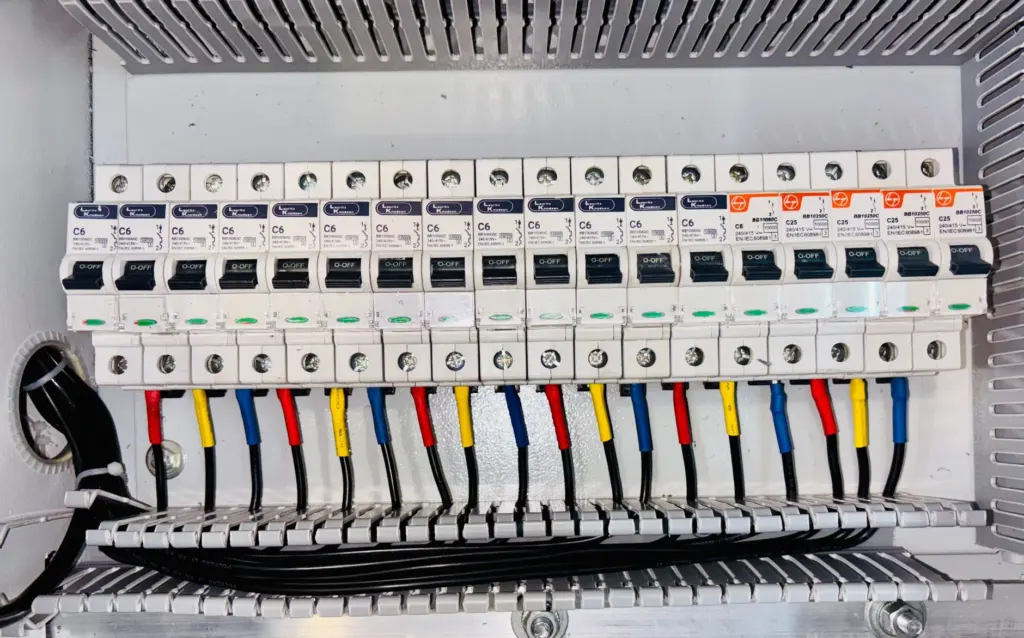
The array’s open-circuit voltage must not exceed the controller’s maximum allowable DC input voltage, according to the xmnewlight guide. Read the open-circuit voltage from the panel label and compare it with the controller’s input rating. A PWM controller has to match the battery’s nominal voltage, so this check mainly decides MPPT models.
Current rating
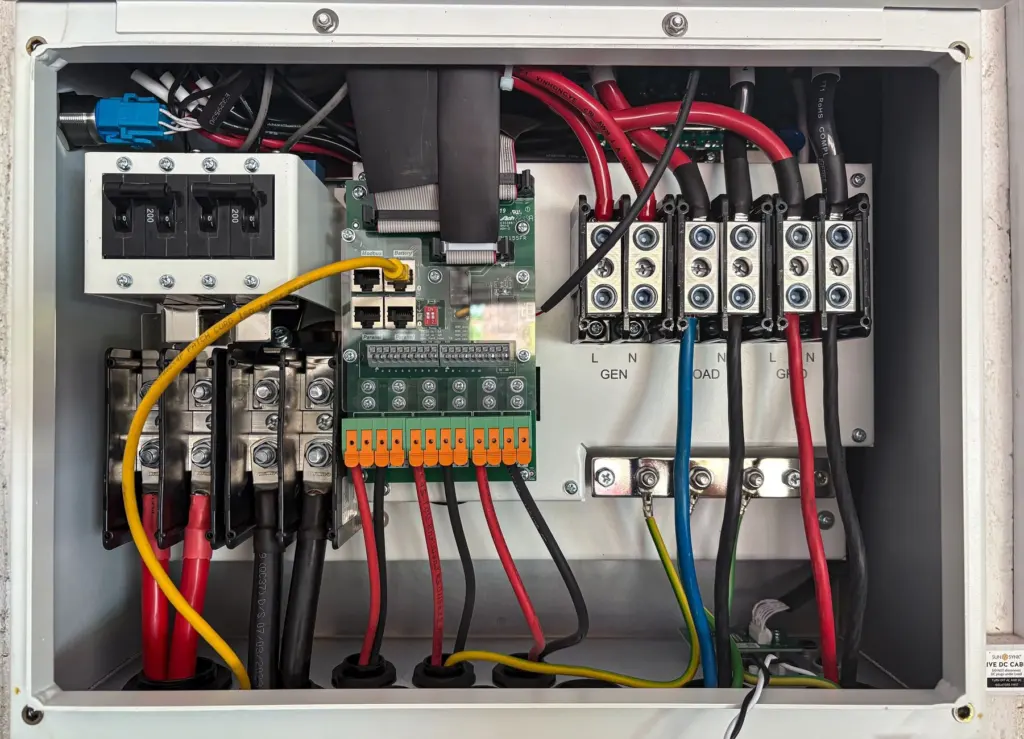
The controller should be rated to handle at least the panels’ maximum current, ideally with some headroom, as The Solar Lab advises. Its example is that panels producing 20 amps at peak suggest a 30A controller. The headroom is an allowance for peak output rather than a target to maximise.
The xmnewlight guide gives a second worked case. For a 400W array on a 12V battery bank, it selects a 40A to 50A MPPT controller. Common battery system voltages are 12V, 24V or 48V, and a higher bank voltage lowers the current a controller must carry.
Another guide warns that MPPT sizing requires precise voltage and current calculations. Work from the panel datasheet values, not from the nominal wattage alone. Household-scale panel counts are a separate exercise; how many solar panels to power a house covers it.
Choosing a controller for an off-grid build
No single controller is best for every off-grid system. The sensible choice follows the array, the battery and the budget.
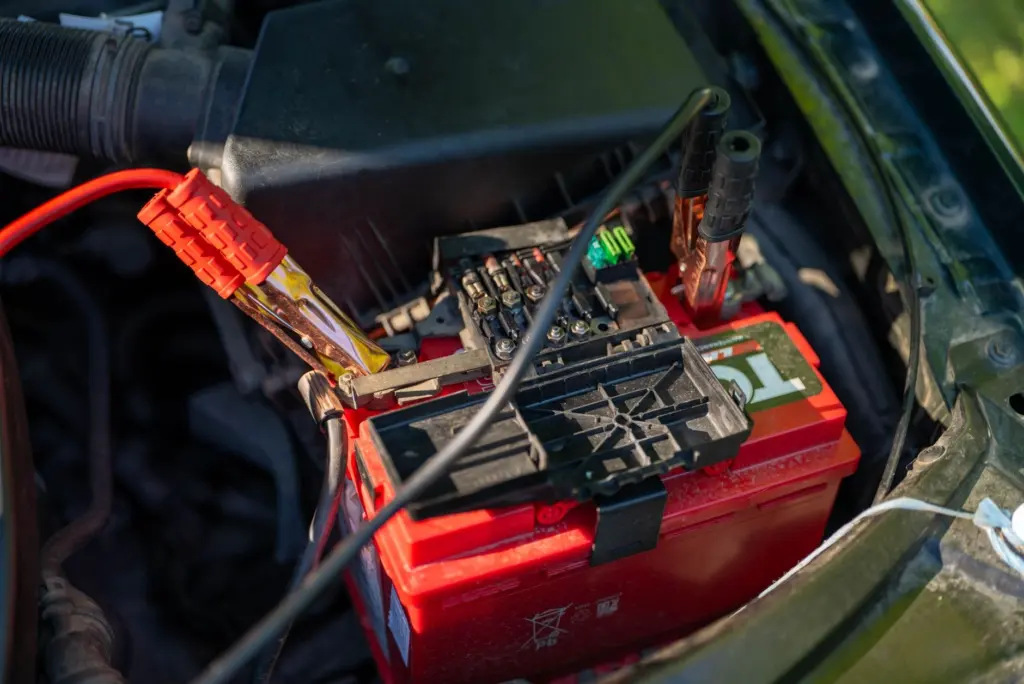
- Small campervan or shed system on a lead-acid battery. PWM is usually enough and costs least.
- Higher-voltage array or lithium battery. MPPT is the better match, because it accepts higher input voltage and supports LiFePO4.
- System likely to grow. MPPT leaves room for a bigger array, provided the voltage and current limits above are checked first.
Frequently asked questions
| Question | Answer |
|---|---|
| Where does the charge controller go in the system? | It is placed between the solar array and the battery bank, according to the xmnewlight guide. |
| Which battery voltages are common? | Common battery systems are 12V, 24V or 48V, per The Solar Lab. |
| Does MPPT last as long as PWM? | Not necessarily. One buying guide says MPPT controllers typically have a shorter lifespan than PWM models. |