| Symptom | First action | Planning use |
|---|---|---|
| You do not know your yearly electricity use | Add up the kWh from the past 12 months on your bills or online account | Annual consumption is the starting figure for system size |
| The panel count looks too high for your roof | Check the wattage on the datasheet of the panel you are quoted | Typical residential ratings run from 250 to 400 W, and a higher rating means fewer panels for the same system size |
| The roof faces away from the sun or is partly shaded | Judge each roof slope separately before counting panels | Shade lowers output per panel, so you may need more panels |
| Winter generation looks poor | Compare against the yearly total, not a single month | Panels produce less in winter than in summer, so size on annual figures |
The quick-reference points come from PickNRG’s sizing guide and CNET’s panel-count walkthrough.
To work out how many solar panels to power a house, divide your yearly electricity use by the yield you can expect per kilowatt peak. Then divide the resulting system size by one panel’s wattage and round up.
This guide covers the panel count only. Storage is sized separately, and the wider picture of home solar panels and battery storage sits in the main solar guide.
Find your yearly electricity use
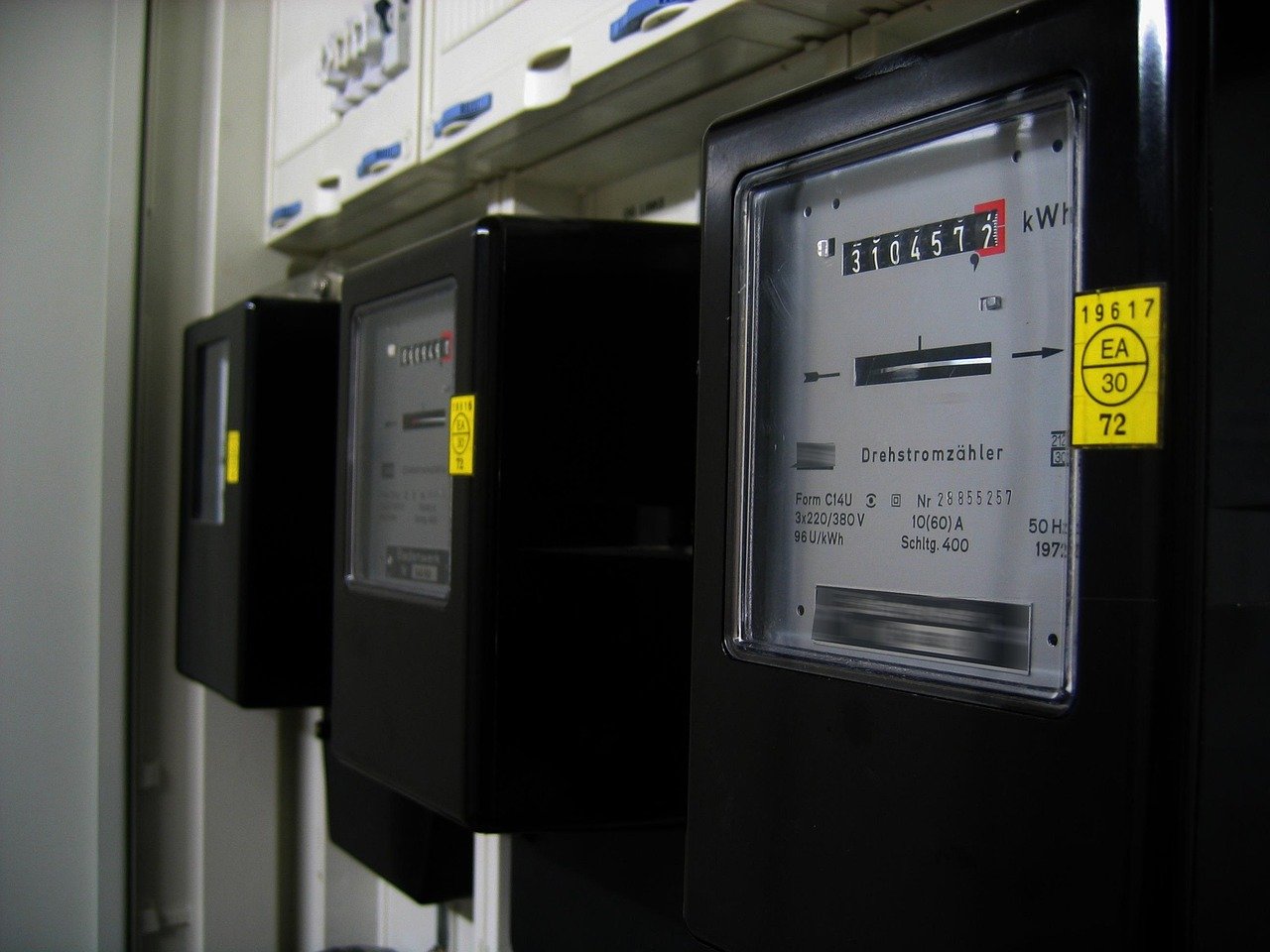
Annual electricity consumption, measured in kilowatt hours (kWh), is the figure every other step depends on. PickNRG suggests adding up your kWh for the past 12 months and dividing by 12 if you want a monthly average. Your bill or online supplier account normally shows this.
If you only have the latest bill, check whether your online account lists the full year. A single winter or summer bill is a poor guide because generation and demand both change through the year.
Do not borrow someone else’s average. Enphase cites about 10,500 kWh per year, or 875 kWh per month, for the average American home. That is a US figure, so your own bills are the better input for a UK house.
Turn consumption into a system size
System size is expressed in kilowatts peak (kWp), the rated output of the whole array. Your annual kWh use sets the target, and the sun your roof receives sets how large the array must be to meet it.
A worked example from daily use
CNET’s worked example shows the chain of steps for a household using 1,500 kWh a month.
- Convert to daily use. 1,500 kWh a month becomes 49.3 kWh a day.
- Divide by peak sun hours. At five peak sun hours a day, the system needs to be 9.86 kW.
- Divide by panel wattage. With 350 W panels, that comes to about 29 panels.
The sun-hours figure is the weakest input for a UK home. When an installer or calculator quotes a yield per kWp for your roof, use that in place of a generic sun-hours assumption.
Allow for real-world losses
Rated output is not what a roof delivers day to day. CNET explains that a performance ratio of 80% means the system produces 80% of its rated output. Sunlith turns this into an adjustment: adjusted system size equals the required size divided by 0.8, so a 6 kW requirement becomes 7.5 kW.
Apply that adjustment only when your yield or sun-hours figure describes ideal output. If a quote already allows for losses, applying it again would oversize the array.
Convert system size into a panel count
The panel count formula from Sunlith is system size in watts divided by panel wattage, rounded up. Rounding up matters because a fraction of a panel cannot be installed, and rounding down leaves you short of your target.
Panel wattage is the choice that moves the answer most. CNET says most residential panels are rated at 250 to 400 W, while Enphase gives 300 to 450 W. Take the wattage from the datasheet of the specific panel in your quote, not from a range. A higher-wattage panel reaches the same system size with fewer modules, which helps on a small roof.
As a sense-check, Enphase says most residential systems consist of 15 to 25 panels. A result far outside that range is a prompt to recheck your consumption figure and your wattage, not a reason to trust the formula blindly.
Measure usable roof space
A panel count only works if the panels fit. CNET gives the common 60- and 72-cell residential panels as about 3 by 5 feet, or 15 square feet each. Multiply your panel count by that footprint and compare it with the clear roof area, leaving out chimneys, vents and windows.

If the count does not fit, move to a higher-wattage panel before cutting the system size. That keeps more of your target output on the roof you have.
Check roof direction and shade
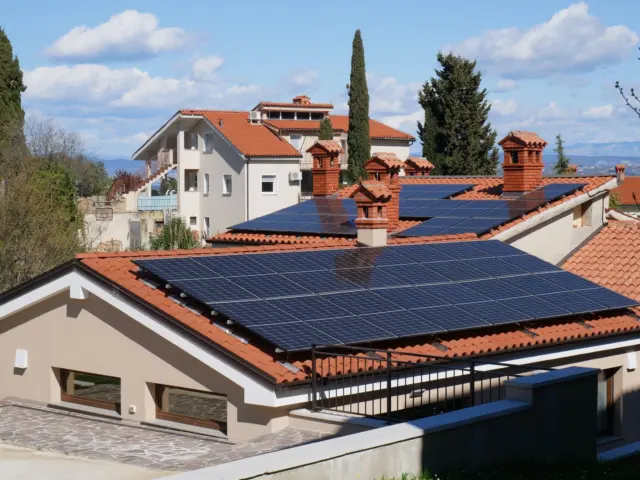
Roof orientation changes how much each panel produces, so it can change how many you need. Enphase describes southern-facing, sloped roofs as ideal for generation, and CNET warns that shade bumps down panel output, so you might need more panels to make up the difference.

Walk the roof slopes and note which way each faces, using a compass or a phone compass app. Then note what shades them, such as trees, neighbouring buildings or chimneys. Shade and direction both reduce per-panel output, so this is a reason to ask an installer for a yield figure specific to each slope. Shading also feeds into hardware choices, covered in string inverter vs microinverter.

Estimate daily output through the year
A panel’s daily output depends on its wattage, the season, its direction and any shade. CNET notes that a panel produces less in winter than in summer. That is why you should size from annual consumption rather than from one good summer day.
For real UK data, a householder’s published log of a 7.6 kW south-facing array in York records daily generation in kWh month by month, and it shows how widely the daily total moves with the seasons. The five peak sun hours in the worked example above are an example assumption, not a UK average. Treat them as a placeholder until you have a yield figure for your roof.
Cross-check with a calculator or installer
Once you have a hand estimate, test it against an MCS installation calculator or an installer’s survey. PickNRG describes a calculator that uses Google Earth images to generate data such as the sunlight available per year, along with roof area. That removes some guesswork about roof size and sunlight, which are the two inputs most people estimate badly.
If your numbers and the tool’s are close, you have a credible panel count. If they are not, compare consumption, panel wattage and the yield or sun-hours assumption, in that order. Off-grid setups that use charge controllers have a separate decision, covered in mppt vs pwm charge controller.
Frequently asked questions
| Question | Answer |
|---|---|
| How many panels suit a three-bedroom house? | Bedroom count does not set the answer; consumption does. Enphase says most residential systems consist of 15 to 25 panels, so use that range to sense-check your own result, with roof space as the limit. |
| Do batteries change the panel count in this method? | No. This method sizes panels from your consumption alone. Battery capacity is a separate calculation with its own sizing page. |
| Is the 29-panel example a UK result? | No. It comes from CNET’s worked example using 1,500 kWh a month, five peak sun hours and 350 W panels. Substitute your own consumption and a yield figure for your roof. |