In the string inverter vs microinverter choice, a string inverter is cheaper and suits an unshaded, single-direction roof, while microinverters or optimisers earn their premium where shade or mixed panel orientations would drag a whole string down.
This comparison belongs to the wider topic of home solar panels and battery storage. It weighs the three ways of handling panel output (a plain string inverter, a string inverter with power optimisers, and microinverters) on shading, cost, warranty, failure points and monitoring.
String inverter, optimiser and microinverter side by side
| Criterion | String inverter | String inverter with power optimisers | Microinverter | Planning use |
|---|---|---|---|---|
| Response to shading | The weakest panel dictates the output of the entire string | Maximum power point tracking handled at panel level | Only the affected panel reduces output (about 10% system impact) | Decides the matter on a roof with chimney, tree or neighbouring-building shade |
| Price premium over a basic string inverter | Baseline | $0.10 to $0.25 per watt | $0.30 to $0.50 per watt | Apply the per-watt gap to the system size in your quote |
| Typical warranty | 12 years standard from most manufacturers | SolarEdge optimisers 25 years; its inverter 12 years standard | Enphase IQ8: 25-year limited warranty | Compare how long the electronics are covered against how long you will own the system |
Figures come from this inverter comparison, apart from the shading impact, which is from this microinverter guide; prices are in US dollars, so use them for proportions rather than as UK quotes.
Shading and multi-direction roofs
Shading is the clearest dividing line between the designs. In a string inverter system the panels are wired in series, so the weakest panel dictates the output of the entire string. One panel in a chimney shadow can therefore pull down every panel wired alongside it.
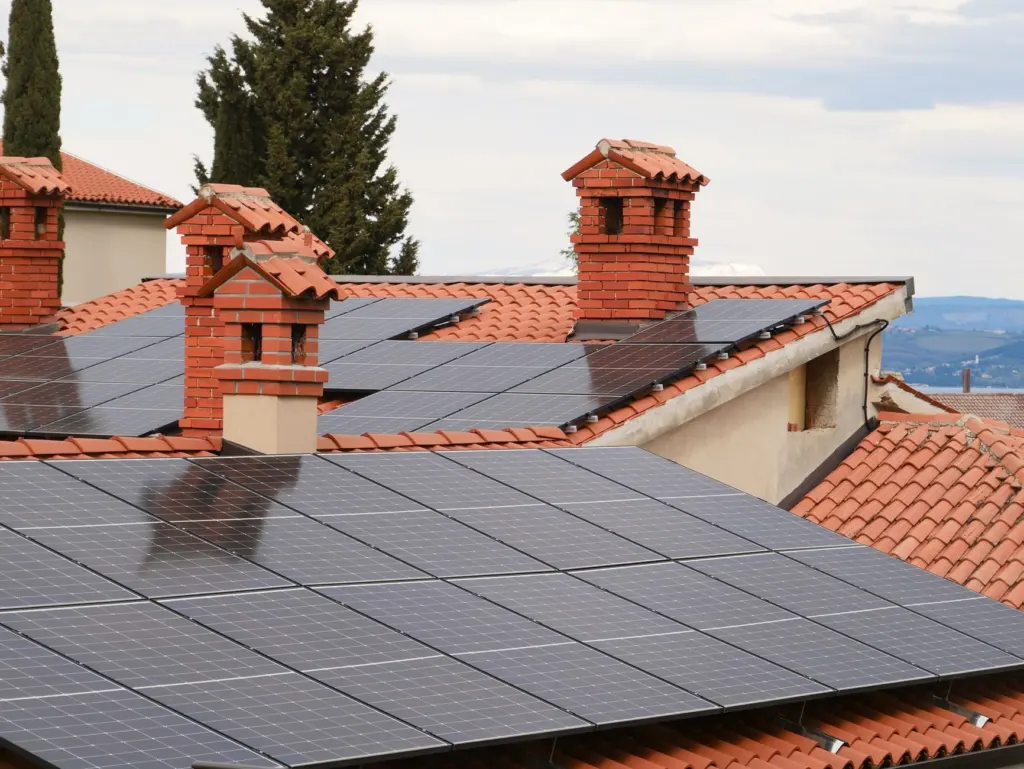
With microinverters, only the affected panel reduces output, which that source puts at about 10% system impact. Power optimisers reach a similar result differently: they handle maximum power point tracking (MPPT) at the panel level. MPPT is the process of adjusting each electrical operating point so the panel delivers as much power as the light allows. Doing it per panel stops one weak panel setting the pace.
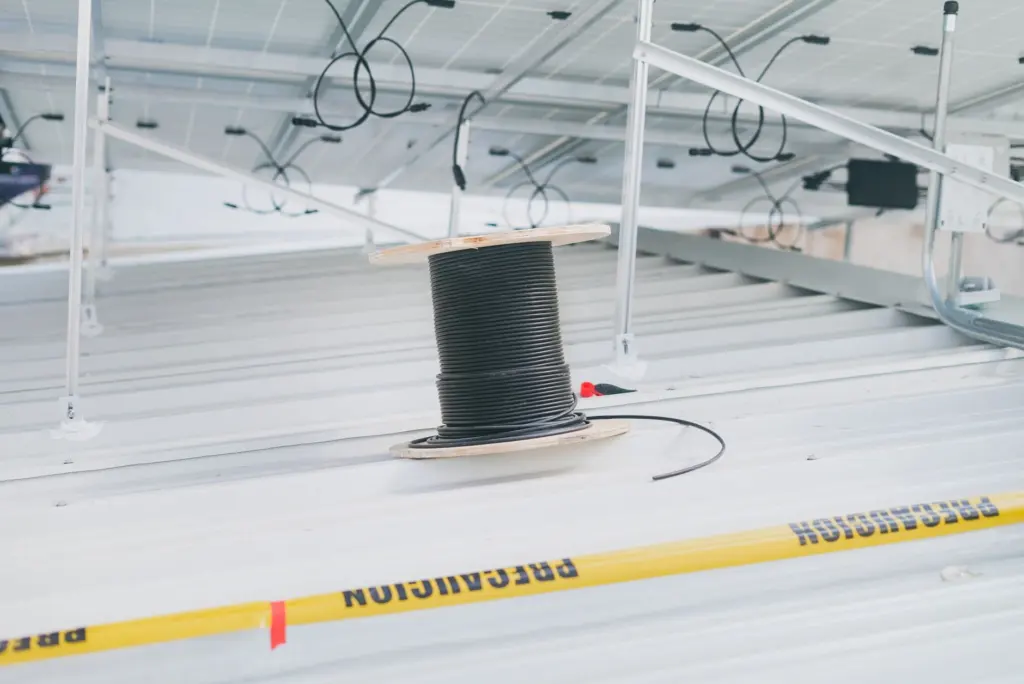
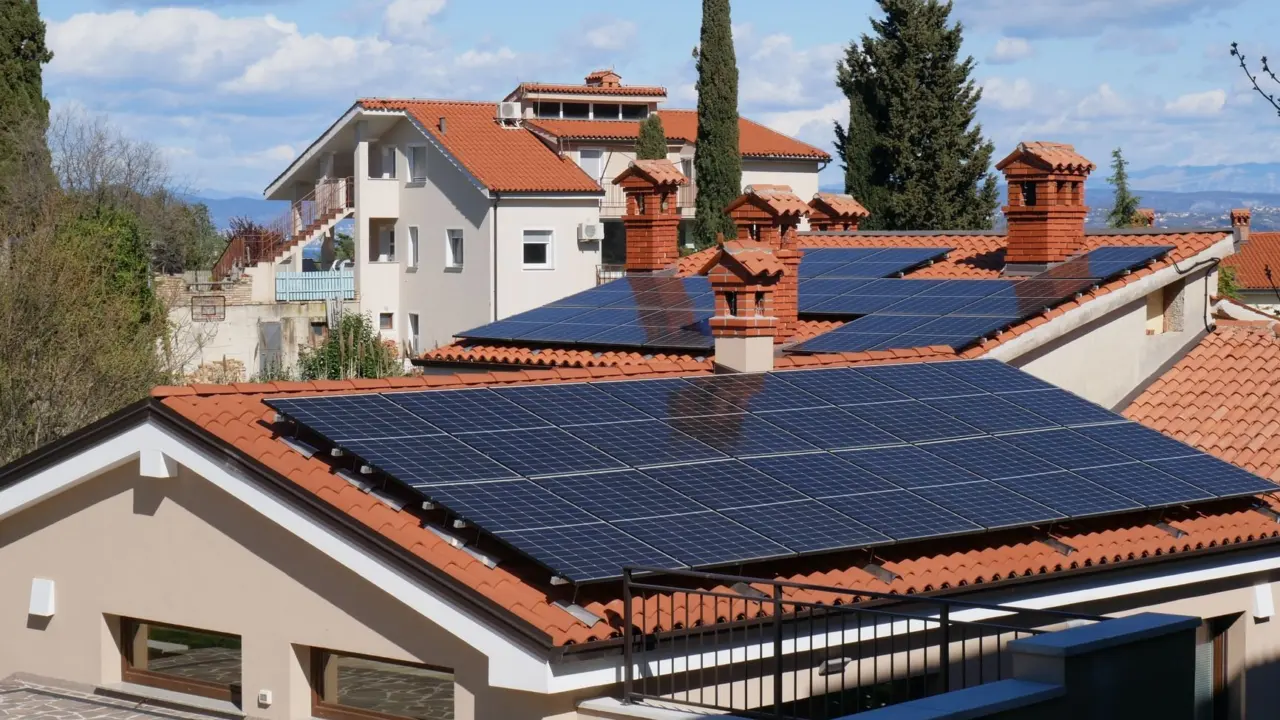
For a multi-direction roof, the same weakest-panel logic applies. Panels facing different ways receive different light at the same moment, so a single string spanning them is exposed to the effect described above. A roof with one clear, unshaded plane is where a plain string inverter loses least. A roof with several planes, chimneys or nearby trees is where panel-level conversion or optimisation is worth pricing.
Power optimiser versus microinverter
A power optimiser is not an inverter. It sits at each panel and conditions its output, with MPPT done there, while a central string inverter still converts the power for the home. A microinverter does the conversion at the panel itself, so no central inverter is needed.
The warranty figures show the split. SolarEdge optimisers carry a 25-year warranty, but the inverter itself only carries 12 years standard. An optimiser system therefore still has a central inverter with a shorter warranty to plan for.
On price, optimisers add roughly $0.10 to $0.25 per watt over a basic string inverter, while microinverters add $0.30 to $0.50 per watt, according to the same comparison. Optimisers suit a roof with partial shade where the budget is tight. Microinverters suit buyers who want panel-level operation with no central inverter to replace.
Cost: are microinverters worth the extra?
Microinverters cost more up front. String systems typically have a 20-30% lower initial investment than microinverter systems. For a 10 kW system before incentives, the same comparison gives approximately $25,000-$28,000 for string and approximately $28,000-$33,000 for microinverters.
At the hardware level, a 6 kW string system needs $1,500-2,500 for a central inverter plus standard wiring, while the microinverters cost $1,800-3,200 in total. These are US-dollar figures, so treat them as a guide to the proportion rather than a UK price.
The premium is worth paying when shade or mixed orientations would otherwise cost output every day, or when a long warranty matters to you. On an open, single-direction roof, the weakest-panel problem barely arises, and the cheaper string inverter is the more sensible buy. For whole-system pricing context, see how much do solar panels cost for a house.
Warranty, lifespan and failure points
Warranty lengths differ between designs and between sources. String inverters carry a standard 12-year warranty from most manufacturers, whereas another source says most string inverters come with 5-10 years, extendable to 20-25 years for a fee. Microinverters are usually longer: the same source says most come with 20-25 year warranties as standard, and the Enphase IQ8 carries a 25-year limited warranty. Check the datasheet for the exact model, and ask whether labour and replacement are covered.
On lifespan, a string inverter has an expected lifespan of 10-15 years with proper maintenance. A warranty is not a lifespan, but a 25-year microinverter warranty sits well beyond that range. Anyone choosing a string inverter should plan for at least one inverter replacement during the life of the panels.
The failure points differ in shape. A string system routes all panels through one central unit, so a fault there affects the whole array. Panel-level units spread the electronics across the roof, which means more devices but each handles only its own panel. Cabling and mounting details matter in either case, and the quote should show where each component sits.
Monitoring detail
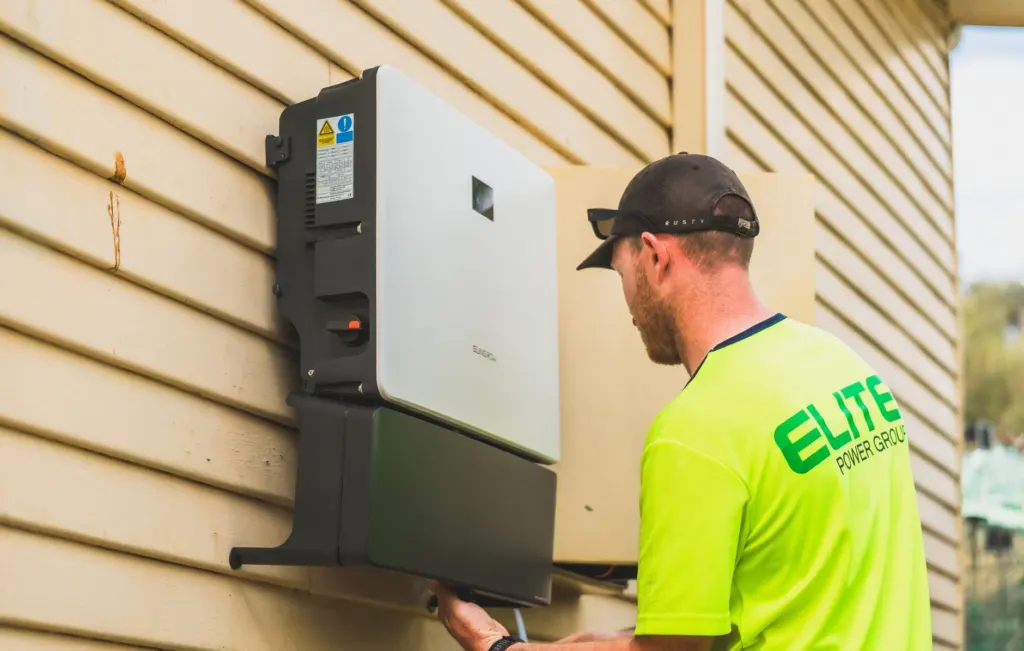
A plain string inverter offers only system-level monitoring. You see total output, but a single underperforming panel is not identified separately. For a shaded roof, where the panel-level difference is the point of the investment, that makes panel-level designs easier to judge once installed. Ask any installer exactly what the monitoring app or display shows for the specific model quoted.
Which to choose
- Choose a string inverter if the roof is open, faces one direction and is free of shade, and the lowest upfront cost matters most. Plan for an inverter replacement within the 10-15 year range.
- Choose power optimisers if the roof has some shade or mixed planes and the budget favours the smaller premium. Remember the inverter still carries the shorter warranty.
- Choose microinverters if shade or several roof directions are significant, you want the longest warranties, or you would rather have no central inverter to replace.
Whichever you choose, settle the array size first. For that, see how many solar panels to power a house, then ask installers to quote each architecture for the same layout.
Frequently asked questions
How much more does a microinverter system cost for a 10 kW array?
One comparison gives approximately $28,000-$33,000 for a microinverter system against $25,000-$28,000 for string, before incentives, in US dollars.
How long does a string inverter last?
Expected lifespan is 10-15 years with proper maintenance, so a replacement within the life of the panels is likely.
Do optimisers have the same warranty as microinverters?
Not for the whole system. SolarEdge optimisers have 25 years of cover, but its inverter has 12 years standard. Enphase IQ8 microinverters have a 25-year limited warranty.
Does one shaded panel affect a whole string?
Yes, on a plain string inverter, because the weakest panel sets the output of the string. Microinverters and optimisers limit the loss to the affected panel.