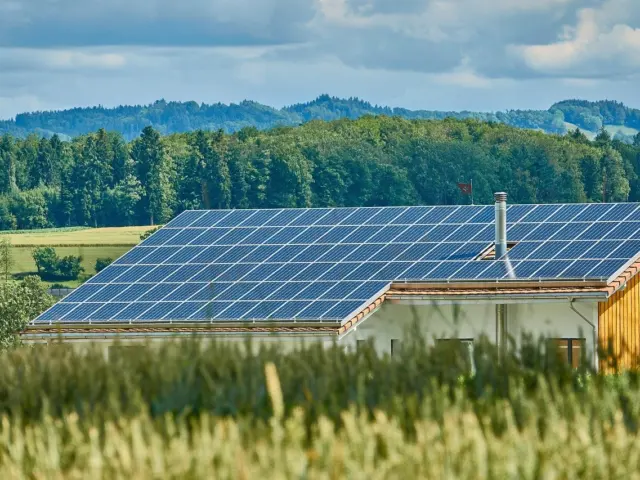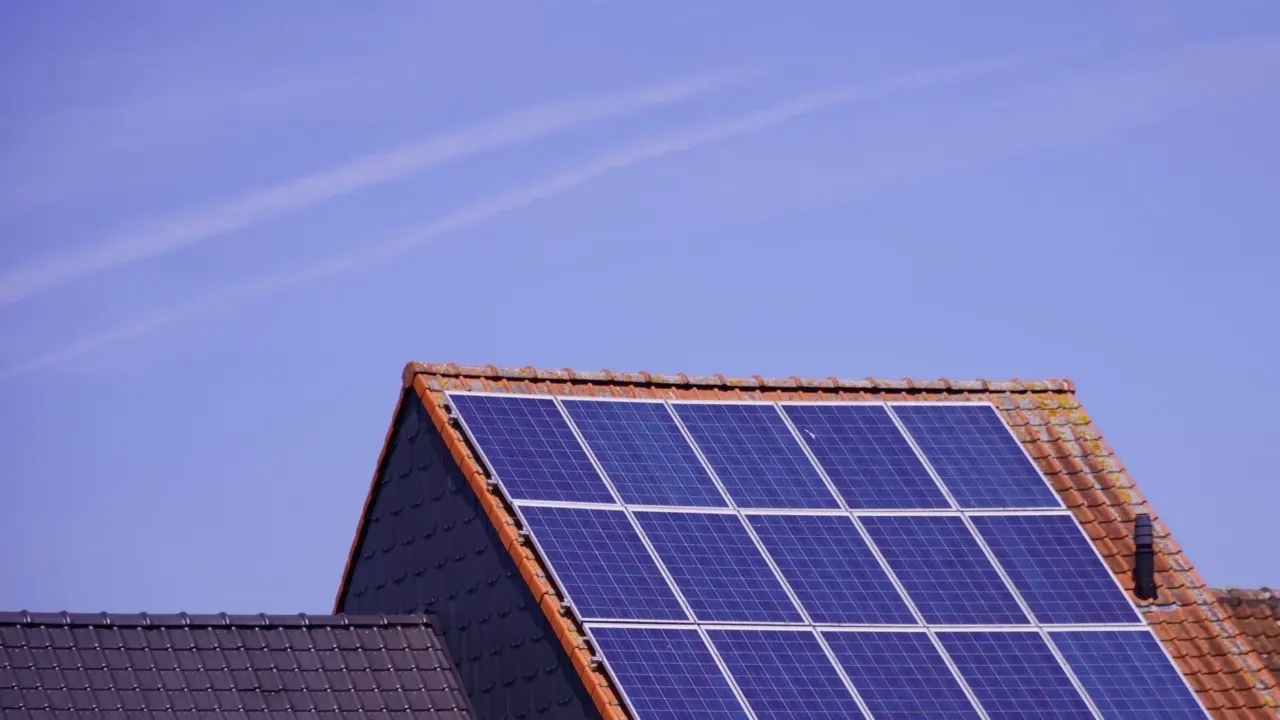
The best angle for solar panels in the UK follows a simple rule: take the site’s latitude, subtract 2.5° for a fixed year-round tilt, and face the array toward the equator, which in the Northern Hemisphere means south.
Tilt and direction are separate decisions, and each changes what a layout can deliver. This guide sits within the wider topic of home solar panels and battery storage. If the basics of generation are unfamiliar, start with how do solar panels work, then return here to choose an angle and a layout.
Tilt angle and azimuth: two separate settings
Tilt angle is the up-and-down slope of a panel. SolarTap’s angle guide defines the scale simply: a panel lying flat sits at 0°, and a panel standing upright sits at 90°. Every real installation falls somewhere between those two ends.
Azimuth is the sideways setting: the compass direction the panel face points. The same guide describes direction as rotating the panels so they point toward the equator. In the Northern Hemisphere, a region that includes Europe and therefore the UK, that equator-facing direction is south. A south-facing array is simply one whose azimuth points that way.
Because the two settings are independent, a panel can have a well-chosen tilt and a poor direction, or the reverse. The direction of each roof plane has to be judged alongside it, which is why the later sections compare south, east-west and north layouts rather than quoting a single angle.
A fixed year-round tilt for the UK
For a mount that stays put all year, the rule of thumb in SolarTap’s guide is to subtract 2.5° from the location’s latitude. The answer to “what is the best angle for solar panels in the UK?” is therefore tied to the site: a more northerly address and a more southerly one give different figures because the latitude input differs. Look up the latitude of the property and apply the rule once, rather than borrowing a number from a different region.
This fixed-angle approach matters because not every mounting arrangement can be changed after installation. The same source notes that not all panels are mounted in a way that allows monthly or seasonal adjustment. Where that applies, the year-round angle is the only angle the array will ever have, so it is the one worth getting right.
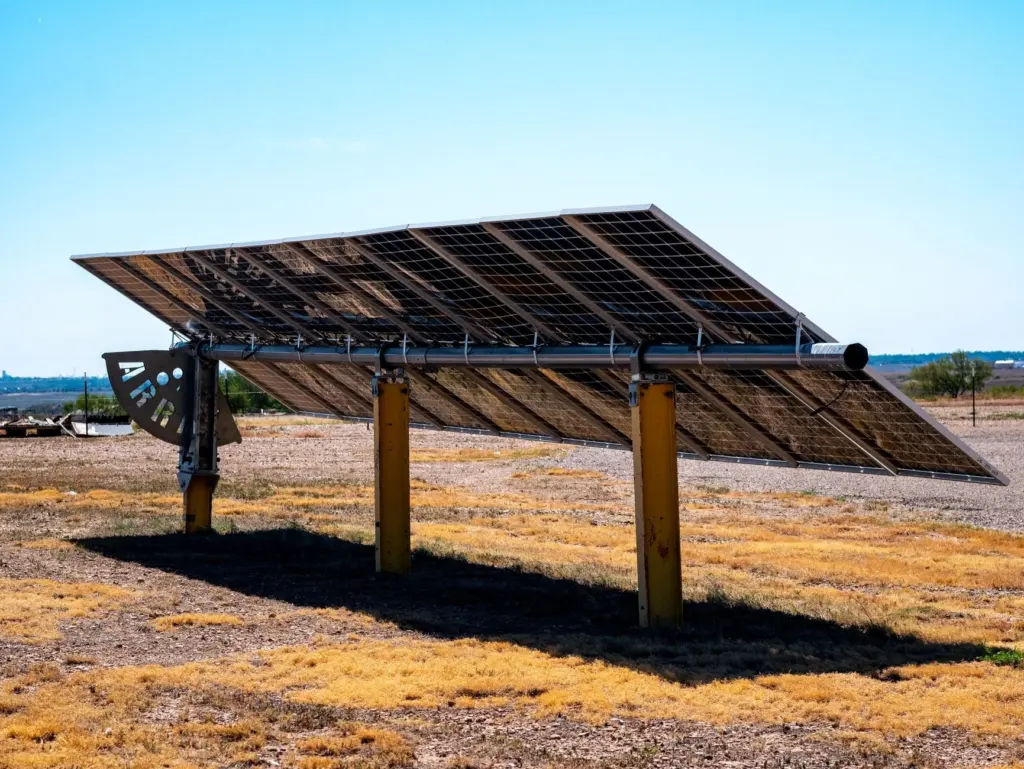
When panels are fixed to follow an existing roof slope, the tilt is whatever the slope measures. In that case the formula works as a sense-check on the roof rather than a target to build toward. A roof pitch near the formula result needs no further thought. A roof pitch far from it is a reason to ask for a site-specific output estimate before assuming the formula is the better choice. How the panels are attached is a separate subject, covered under solar panel mounting systems.

Seasonal tilt angles for adjustable mounts
An adjustable mount allows the tilt to follow the seasons. SolarTap’s guide gives separate Northern Hemisphere formulas for summer and winter, both built on the same latitude figure. The winter formula adds a constant while the summer formula subtracts one, so the winter setting is always the steeper of the two.
| Setting | Formula (Northern Hemisphere) | Planning use |
|---|---|---|
| Year-round, fixed | Latitude − 2.5° | Default for any mount that cannot be changed after installation |
| Summer | 0.9 × latitude − 23.5° | Shallower setting, relevant only to adjustable mounts |
| Winter | 0.9 × latitude + 29° | Steeper setting, relevant only to adjustable mounts |
These formulas come from SolarTap’s solar panel angle calculator guide, which also notes that its angles are estimates rather than measured output.
It adds 9° to the year-round angle each month between June and December. That method only makes sense for a mount designed for frequent changes. For most households a single well-chosen fixed angle is the practical option, and the seasonal formulas are best read as showing how far a fixed angle sits from the seasonal ideal.
South-facing, east-west and north layouts
The direction rule sets the baseline for comparing layouts: the equator-facing direction is the reference, and every other layout is measured by how far it turns away from that. The three layouts below are the ones most households actually choose between.
South-facing array
A south-facing array points at the equator-facing direction that SolarTap’s guide recommends for the Northern Hemisphere. If a roof has a usable south-facing slope, this is the layout to price first, with the tilt set from the year-round rule or the existing roof pitch. It is the simplest layout to reason about because direction and tilt each have a documented starting point.
East-west array
An east-west array splits the panels across opposite slopes, usually either side of a ridge. Neither face points toward the equator, so the layout departs from the baseline in both directions at once. Tilt still has to be chosen separately for each face, and on a pitched roof each face takes the pitch of its own slope.
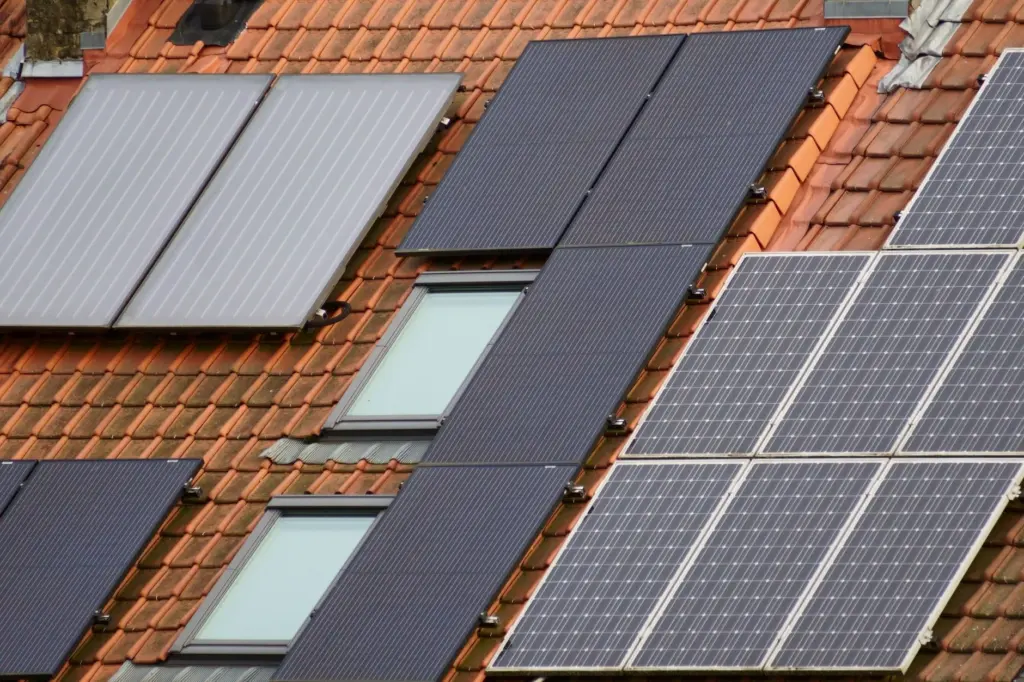
An east-west layout suits a roof with no usable south slope, or an owner who wants panels on more than one plane. Compare it against a south-only layout using a site-specific output estimate for the actual roof, entering the direction and pitch of each face. A general rule cannot settle the trade-off for a particular house.
North-facing array
A north-facing slope points away from the equator, so it starts from the opposite end of the direction scale to a south-facing one. Whether north-facing solar panels are worth it depends on how the modelled output for that slope compares with the alternatives on the same roof. The sensible order is to price south and east-west options first and treat a north-facing plane as a secondary option that has to justify itself on its own estimate.
Checking your own roof
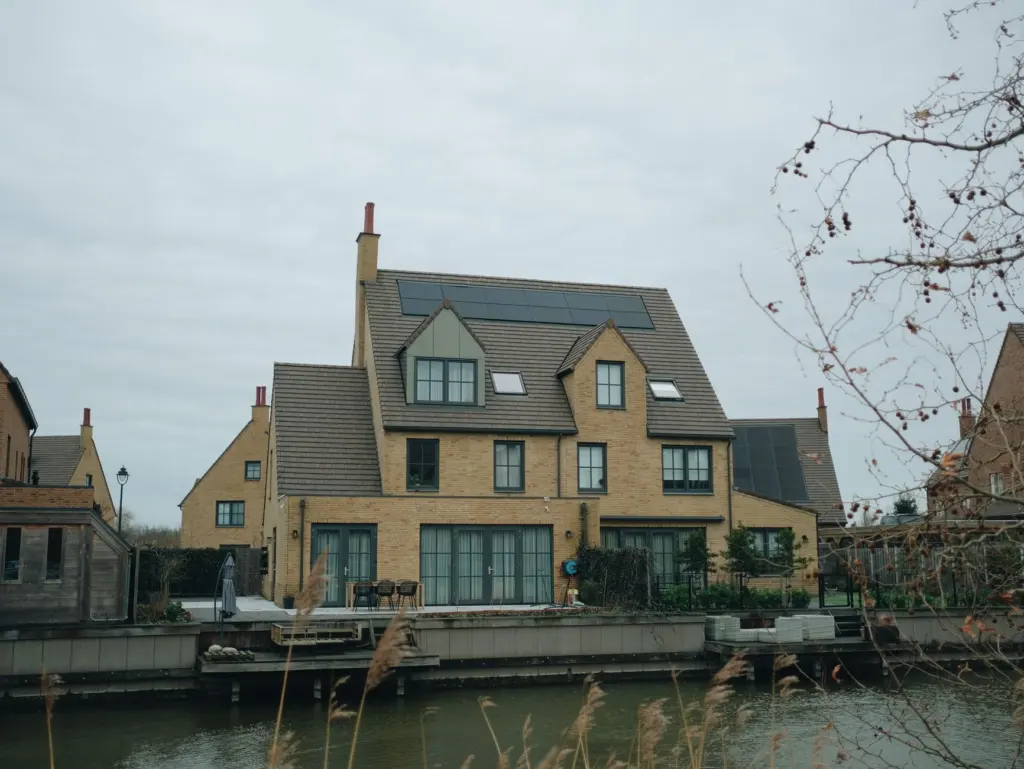
Two measurements feed every decision above: the compass direction each roof plane faces, and its slope in degrees. A compass reading gives the direction, and an angle gauge or inclinometer held against the rafters or tiles gives the slope. Record both for every plane you might use, then compare them with the equator-facing direction and the year-round tilt rule.
Once these figures are in hand, ask an installer or a modelling tool for estimates that use the real direction and slope of each plane. That comparison is more reliable than any formula, because the formulas in this guide are estimates and do not account for the details of an individual roof.
Frequently asked questions
Are the formula angles exact?
No. SolarTap describes its tilt angles as estimates. Treat them as a starting point and confirm a layout with output estimates for the real roof.
Can panel tilt change through the year?
Only if the mount allows it. Not all mounts can be adjusted monthly or seasonally, and a fixed mount needs the single year-round angle.
Do these formulas apply outside the UK?
The formulas quoted here are the Northern Hemisphere versions. SolarTap defines that region as including the U.S., Canada, Mexico, Europe and most of Asia, so the same latitude-based approach applies across it.